
By SmartMoneyAI | AI Money Tools | June 2026 | 9 min read
You’re not imagining it. The grocery bill is real.
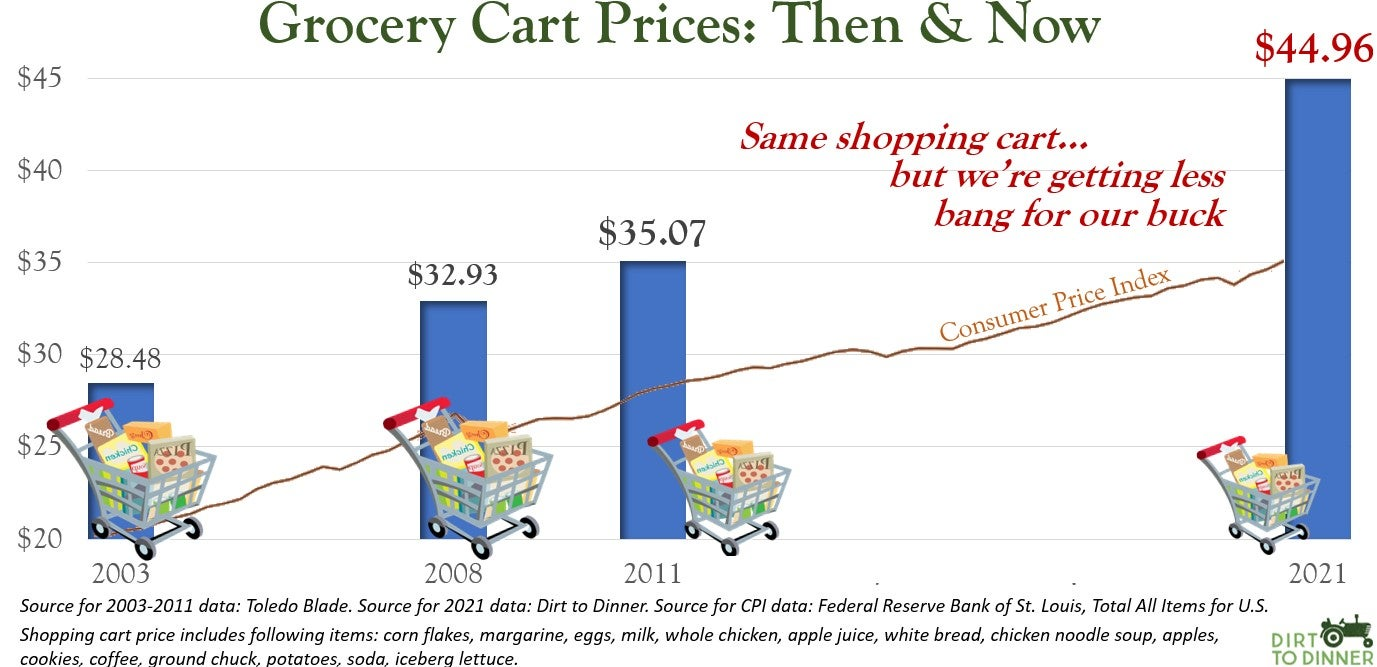
Tariffs. Supply chain pressure. Energy costs passed to manufacturers, then to retailers, then to you. A CNN/SSRS poll from May 2026 found that 76% of Americans now identify cost of living as their single biggest economic concern. Senate economists estimate the typical U.S. household will pay roughly $2,100 more this year than last — and a chunk of that hits at the grocery store, the gas pump, and the checkout line every single week.
The math is brutal. But here’s what the headlines don’t tell you: the same AI technology driving economic disruption is also the most powerful tool average Americans have ever had for fighting back against rising prices.
Not in a vague “ask ChatGPT for frugal tips” way. In a specific, prompt-it-and-use-it-today way. People are using AI to meal plan around sale cycles, substitute expensive ingredients without sacrificing meals, find price-matching deals in seconds, and slash their grocery bill by $200–$400/month — without eating worse.
Here’s the full playbook.
Step 1: Let AI Build You a “Price-Smart” Meal Plan
The biggest money leak in most grocery budgets isn’t the occasional splurge — it’s the habit of planning meals first, then buying ingredients at whatever price they happen to be.
Flip that equation. Give an AI your weekly budget, your household size, and whatever proteins or produce are on sale this week (check your store’s app or weekly circular), and let it build a meal plan around those items — not the other way around.
Here’s a prompt that works:
“Build me a 7-day dinner meal plan for a family of [X] on a $[Y] weekly grocery budget. This week, chicken thighs are on sale for $1.49/lb and canned tomatoes are $0.89/can. Prioritize those as primary ingredients. Minimize food waste by using overlapping ingredients across multiple meals. Include a shopping list organized by store section.”
What you get back is a full week of meals engineered around what’s cheap right now — not what sounds good on a meal planning blog. Done weekly, this one habit alone typically saves households $60–$120/month.
Pro tip: Add this line to the prompt: “Flag any ingredient that can be bought in bulk for significant savings.” The AI will identify where a warehouse store run makes sense versus where it doesn’t.
Step 2: Use AI to Master the Substitution Game
Ingredient costs are not created equal — and they don’t move together. When beef prices spike (up significantly this year due to supply pressures), chicken and pork often haven’t moved as much. When one brand of olive oil jumps, another hasn’t yet.
AI is exceptional at ingredient substitution because it understands flavor profiles, cooking chemistry, and nutritional equivalence simultaneously. Most people only think to swap one thing for another when they’re standing in the aisle staring at a price tag. With AI, you can do it before you ever leave the house.
Try this:
“Here are 5 recipes I want to make this month: [list them]. For each recipe, give me 2-3 ingredient substitutions that would meaningfully reduce the cost without significantly changing the flavor or texture. Focus especially on proteins, oils, and specialty items.”
Or if you’ve already noticed prices jump on something specific:
“Ground beef is $7.89/lb at my store right now. What are the best lower-cost substitutes for ground beef in [tacos / pasta sauce / meatloaf / burgers], and how do I adjust the recipe for each?”
Families who build this habit — running a quick substitution check before finalizing a grocery list — typically find 3–5 swaps per week that save $15–$30 without any noticeable difference in their meals.
Step 3: Price-Match Like a Pro With AI’s Help
Most major retailers now have price-match policies — but using them requires knowing a competitor has a lower price, which requires comparing ads across 3–5 stores before you shop. Almost nobody does this because it’s tedious.
AI makes it fast.
Copy and paste the weekly sale items from 2–3 store apps or websites into your AI tool and ask:
“Here are this week’s sale prices from [Store A], [Store B], and [Store C] for these items: [paste list]. For each item, tell me which store has the lowest price and by how much. Then tell me which store I should do my main shop at to minimize my total spend based on these items.”
The AI will do the cross-store comparison instantly and tell you exactly which store wins for the week — and for which specific items it’s worth making a secondary stop.
For stores with formal price-match policies (Walmart, Target, and many regional grocers have them), the AI can also help you:
“Write a quick, polite price-match request I can show a cashier at [Store] for [item] currently priced at $[X] at [Competitor].”
One caveat: always verify current sale prices directly in-store or through official store apps before assuming a price is still active. Sales change weekly, and AI’s knowledge of specific current promotions is limited — the comparison only works when you supply the current prices.
Step 4: Build a Pantry System That Fights Inflation Automatically
Here’s what most price-conscious shoppers don’t realize: the best time to buy something is not when you need it. It’s when it’s at its lowest price in the cycle.
Staples — canned goods, pasta, rice, frozen proteins, condiments — rotate through sale cycles roughly every 6–8 weeks at most grocery stores. If you buy 4–6 units when something hits its sale low, you never have to buy it at full price again.
The problem is tracking which items you’re low on, what’s at a sale price, and how much to stock. AI can manage this for you.
Start by building your pantry list with this prompt:
“Help me create a ‘pantry stocking system’ for a household of [X]. List the 20 most cost-effective non-perishable and freezer staples to keep on hand, and for each one, tell me: (1) how much to stock at a time, (2) typical shelf or freezer life, and (3) what to watch for as a signal it’s hit a sale price worth stocking up on.”
Once you have the list, update it monthly:
“Here’s my current pantry stock: [list]. Here are this week’s grocery sales: [list]. Which pantry items should I stock up on this week, and how much should I buy?”
Households who run a stocked pantry system spend 15–25% less on groceries annually than those who shop reactively — not because they’re more disciplined, but because they’re never forced to buy anything at full price.
Step 5: Run a “Receipt Audit” to Find Hidden Spending Patterns
Most people have a vague sense of how much they spend on groceries. Almost nobody knows where that money actually goes — which categories are eating the budget, which items they buy repeatedly at high prices, and what they throw away most often.
A receipt audit takes 10 minutes and usually reveals $50–$100/month of low-hanging savings.
Take 4–6 weeks of grocery receipts (most stores let you pull these from their app purchase history), copy the line items into an AI tool, and ask:
“Here are my grocery purchases from the last 4–6 weeks: [paste items and prices]. Please analyze my spending by category, identify the top 5 highest-cost items or categories, flag any items I appear to be buying repeatedly that might be cheaper bought in bulk or substituted, and estimate where I’m most likely losing money to food waste based on what I’m buying.”
Common finds from a receipt audit:
- Pre-cut and pre-washed produce — typically 40–70% more expensive than whole
- Single-serve packaging — drinks, snacks, yogurt — where bulk is dramatically cheaper
- Name-brand items in categories where store-brand quality is identical (cooking oils, canned goods, spices, baking basics)
- “Convenience” proteins like rotisserie chicken that are actually better value than raw, or vice versa
The AI won’t judge your receipts. It’ll just tell you where the money’s going.
Step 6: Get AI to Write Your Coupon and Rebate Strategy
Couponing has a reputation for being time-consuming and complicated. In 2026, it doesn’t have to be.
Apps like Ibotta, Fetch, and store loyalty programs offer meaningful rebates — but the average user only uses a fraction of available offers because finding and stacking them is tedious. AI can simplify the whole system.
“I shop primarily at [store(s)]. I use [Ibotta / Fetch / store loyalty app]. Here’s my typical weekly grocery list: [list]. Which of these items are most likely to have rebates or digital coupons available? What’s the most efficient way to check for and stack savings before I shop?”
The AI will walk you through a simple pre-shop routine — 5 minutes of checking the right apps in the right order — that can realistically save $20–$40 per shopping trip for an average family.
It can also help you decide which loyalty programs are actually worth your time:
“I’m considering signing up for loyalty programs at [Store A] and [Store B]. Based on typical household grocery spending of $[X]/month, help me evaluate which program offers better real-world value and what I need to do to maximize it.”
The Real Numbers: What This Playbook Is Worth
If you’re skeptical that AI prompts can actually move the needle on a grocery bill, here’s the honest math:
| Strategy | Realistic Monthly Savings |
|---|---|
| AI-generated price-smart meal planning | $60–$120 |
| Ingredient substitution habits | $30–$60 |
| Cross-store price comparison | $20–$40 |
| Pantry stocking system | $50–$100 |
| Receipt audit findings | $40–$80 |
| Coupon/rebate optimization | $20–$40 |
| Total | $220–$440/month |
At the high end, that’s over $5,000 a year — which more than offsets the $2,100 tariff burden economists are projecting for the average household this year.
You won’t hit every number every month. But working through even half of this playbook consistently puts real money back in your budget from spending you’re already doing.
Quick-Start Prompts to Copy Right Now
Save these and use one this week.
- “Build me a 7-day meal plan for [X people] on a $[Y] budget. These items are on sale this week: [list]. Minimize food waste with overlapping ingredients.”
- “What are the best lower-cost substitutes for [ingredient] in [dish], and how do I adjust the recipe?”
- “Here are grocery purchases from the last 4 weeks: [paste]. Analyze my spending by category and find where I’m overpaying.”
- “Create a pantry stocking system for [X people]. List the 20 best non-perishable staples with stock amounts and sale signals to watch for.”
- “Here’s my grocery list: [list]. I shop at [stores] and use [apps]. Walk me through a pre-shop routine to maximize savings this week.”
The Bottom Line
Prices are up. That part isn’t changing quickly. But the playbook for fighting back has never been more accessible — or more powerful.
AI doesn’t replace discipline or effort. But it does replace the most friction-filled parts of saving money: the comparison shopping, the meal planning calculations, the coupon hunting, the substitution research. It does that work in seconds, so you can spend your energy on one thing: following through.
$2,100 is what the average family is projected to lose to higher prices this year. With the right prompts and 20 minutes a week, you can take most of that back.
Start with one prompt. Run it before your next grocery trip. See what comes back.
💬 What’s the biggest money-saver you’ve found at the grocery store this year? Share it in the comments — the community wants to know.
📩 Get one AI money tip per week, straight to your inbox. Subscribe to the SmartMoneyAI newsletter.
🔗 Related: The AI Bill-Cutting Playbook: How to Lower Every Monthly Expense in 2026
Disclaimer: This content is for informational and educational purposes only and does not constitute financial advice. Savings estimates are illustrative and vary by household, location, store availability, and spending habits. Sale prices and rebate availability change weekly — always verify directly in-store or through official retailer apps before shopping.
Leave a Reply